Successful Completion of Fieldwork for the National Energy Balance in Terms of Useful Energy for Paraguay’s Commercial Sector

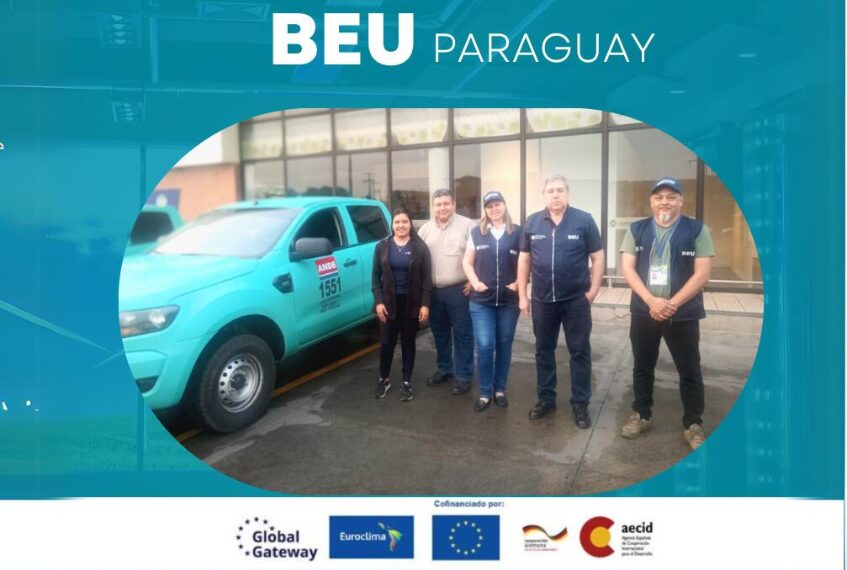
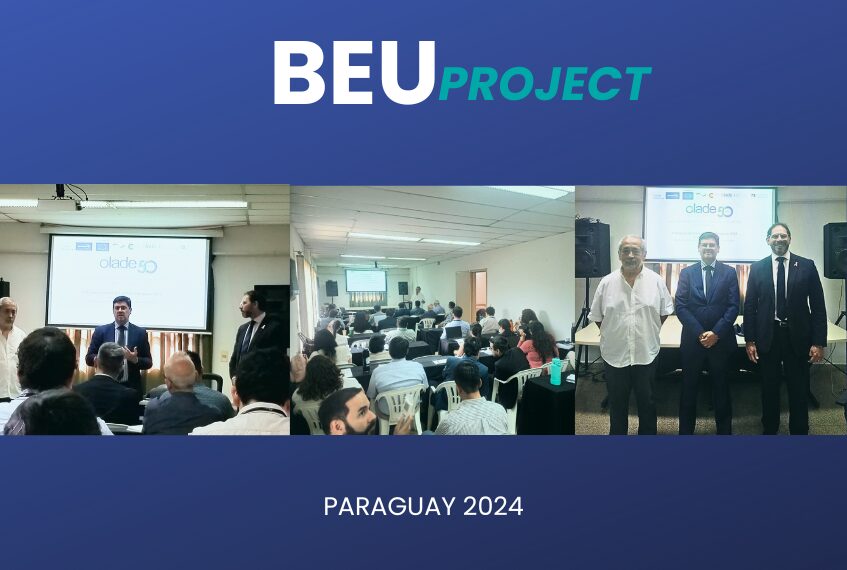
The project “National Energy Balance in Terms of Useful Energy for Paraguay’s Commercial Sector,” funded by the European Union’s EUROCLIMA program with support from AECID, is in its final implementation phase. This initiative builds upon another project executed between 2020 and 2023. In September 2024, the fieldwork phase concluded successfully, with the primary goal of gathering information on energy consumption and flows in the commercial, services, and public sectors of the Republic of Paraguay. In summary, 432 surveys were conducted out of an official sample of 472 establishments, categorized into the following subsectors: Wholesale Trade; Retail Trade; Hotels and Restaurants; Education, Health, and Social Assistance; Public Administration and Defense; Water and Sanitation; and Other Services. The collected data is being analyzed and processed by the project’s technical team to produce the useful energy balance for the described sectors and update the useful energy balances developed during the previous project, which covered the industrial, residential, and transportation sectors. The next phase of this project will include two components: training and knowledge transfer targeted at officials from national institutions responsible for energy planning, and a panel discussion during the IX Energy Week, where beneficiary countries (Ecuador, Panama, and Paraguay) will present and discuss the impact and necessity of a useful energy balance from their perspectives. The training and knowledge transfer will take place on October 24 and 25, while the panel discussion is scheduled for Wednesday, October 30. It is worth highlighting that hosting this panel within the context of an event like Energy Week brings international attention to the importance of energy information and its implications, uses, and potential in terms of energy planning and as a driver of energy efficiency. This project includes the following milestones:
  1. Developing the useful energy balance for Paraguay’s commercial, services, and public sectors.
  2. Updating the useful energy balance for Paraguay’s industrial, residential, and transportation sectors.
  3. Updating OLACDE’s Useful Energy Balance Methodology based on the implementation experience of this project and its scaling.
  4. Training officials from various public entities in the development of sectoral useful energy balances.
  5. Highlighting the importance, benefits, challenges, and results of this type of project in a high-level panel during the IX Energy Week.
  6. Producing a document outlining key energy efficiency actions that a country can undertake based on the information obtained through a useful energy balance.
About Euroclima Euroclima is a program funded by the European Union and co-financed by the German Federal Government through the Federal Ministry for Economic Cooperation and Development (BMZ), as well as by the governments of France and Spain through the Ministry of Foreign Affairs, European Union, and Cooperation. The program’s mission is to reduce the impact of climate change and its effects in 33 countries across Latin America and the Caribbean, promoting mitigation, adaptation, resilience, climate investment, and biodiversity. This is implemented under the “Team Europe Spirit” through the synergistic work of seven agencies: the Spanish Agency for International Development Cooperation (AECID), the AFD Group: French Development Agency (AFD)/ Expertise France (EF), the Economic Commission for Latin America and the Caribbean (ECLAC), the International and Ibero-American Foundation for Administration and Public Policies (FIIAPP), the Deutsche Gesellschaft für Internationale Zusammenarbeit (GIZ) GmbH, the UN Environment Programme (UNEP), and the United Nations Development Programme (UNDP).
Share this news

Successful Completion of Fieldwork for the National Energy Balance in Terms of Useful Energy for Paraguay’s Commercial Sector

Newsletter summary

The project “National Energy Balance in Terms of Useful Energy for Paraguay’s Commercial Sector,” funded by the European Union’s EUROCLIMA program with support from AECID, is in its final implementation phase.

Knowledge and Training

We promote advanced technical training programs that facilitate the exchange of experiences, as well as the development of the human and institutional capacities needed to support the energy transformations in our region.

Our academic offering includes executive programs, postgraduate diplomas, master’s degrees, and innovative initiatives focused on topics such as energy transition, conventional energy, renewable energy, e-mobility, and regional integration.

OLACDE creates a regional network focused on energy knowledge that connects governments, young professionals, academics, and sector experts to drive collaborative solutions through technical cooperation and talent development to address future energy and climate challenges.

Technical cooperation and financing

We strengthen South-South and triangular cooperation ties as drivers to accelerate energy transitions in Latin America and the Caribbean. OLACDE brings together efforts among governments, multilateral organizations, academic institutions, and the private sector to mobilize financing, technical capacities, and innovative solutions tailored to our regional reality.

We promote strategic initiatives aimed at directing resources toward projects focused on decarbonization, conventional energy, renewable energy, and energy justice, with the objective of establishing a more efficient, inclusive, and sustainable regional cooperation architecture.

Regional Energy Community

We are building a regional energy community with a global outlook that seeks to position Latin America and the Caribbean as a key player on the international stage. OLACDE strengthens its representation in major multilateral forums related to energy, trade, and climate by fostering strategic alliances and promoting international cooperation.

Through events such as Energy Week, together with new spaces for international dialogue, we promote a collective voice that helps attract financial investment and create new opportunities for sustainable development across our region.

Energy Transition and Strategic Projects

We drive an energy transition based on principles of sustainability, energy security, and social inclusion. OLACDE supports countries in adopting new technologies related to energy efficiency, energy storage, green hydrogen, electromobility, and grid digitalization to accelerate the sector’s decarbonization process.

Our approach also includes promoting strategic projects that strengthen energy resilience at the regional level, contributing to emission reductions while consolidating a cleaner and more competitive energy infrastructure. Initiatives such as OEMLAC position our region as a leading reference in climate innovation and sustainable energy transition.

Energy information and data

We develop regional platforms dedicated to energy information, technical analysis, and strategic data systems that strengthen both public and private decision-making in the sector. OLACDE promotes the digital transformation of the sector through the use of artificial intelligence, georeferencing, and advanced tools for regional energy analysis.

The integration of systems such as SieLAC, together with new regional platforms, allows for the consolidation of reliable and up-to-date technical information, facilitating modern, interoperable, and evidence-based energy planning.

Regional Energy Integration

We promote cooperation in the regional energy sector, focused on collaboration, infrastructure development, and regulatory harmonization, with the objective of strengthening energy security in Latin America and the Caribbean. OLACDE coordinates projects related to electrical interconnection, gas integration, and regional energy planning, seeking to create efficient and sustainable partnerships.

Through cooperation with the governments of our 27 member countries, regional blocs, multilateral institutions, and both public and private stakeholders, we drive strategic initiatives that promote regulatory harmonization and new energy exchange mechanisms, in order to enhance national capacities and accelerate an integrated energy transition at the regional level.

This site is registered on wpml.org as a development site. Switch to a production site key to remove this banner.