2.375 inhabitants of 3 communities in Guyana are benefited with the implementation of the OLACDE Rural Electrification Methodology

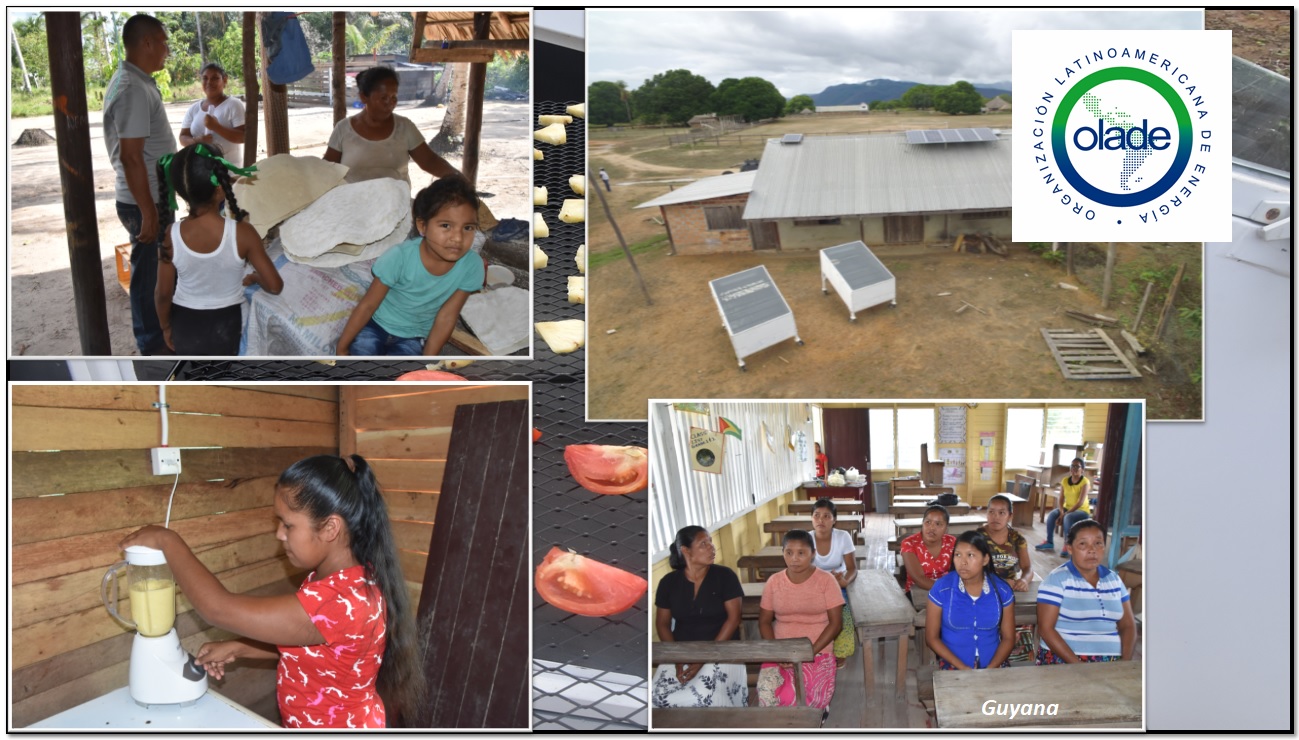
A total of 2,375 inhabitants of the Powaikoru, Moraikobai and Shulinab communities in Guyana are benefited with photovoltaic systems, which were implemented through the pilot projects, executed with the OLACDE Rural Electrification Methodology (Methodology of Management of Rural Energization Projects with Inclusion of Social Variables and Corporate Social Responsibility).

These projects, which are promoted by OLACDE and financed thanks to the support of the Canadian Cooperation, focused on the implementation of refrigeration systems to preserve the products of hunting and fishing; and in equipment for the guest house where people interested in ecotourism activities. Main needs that were defined by the inhabitants.

In close relationship with the country’s energy authorities, especially with Guyana Energy Agency (GEA), some communities were pre-selected to be beneficiaries of the pilot project.

In accordance with the characteristics of the communities and the available energy potential, various photovoltaic systems were also selected to provide energy to productive projects for the use of electricity; with the purpose of promoting the sustainable development of the participating communities.

Through one of the social variables that are handled in the Methodology, their real situations were evidenced in order to create awareness of the actions in which they are involved and affect them in order to achieve an alternative that improves their quality of life.

The empowerment that was generated in the inhabitants of the communities, through the projects, was key in the sustainable rural development, since it contributed to turn them into protagonists of their own change towards a better collective future.

The gender issue played a fundamental role in the implementation of the projects, since equality of participation is part of the inclusion variable, which aims for equity. What equality implies to say; choose and be elected; and in accessing benefits and costs related to the project.

Through different state institutions, of Guyana, capacity building was carried out for the inhabitants; focused on the development of projects that generate income and the chain of other productive processes within the communities.

Electricity coverage data in Latin America

Latin America and the Caribbean has electricity coverage of 96.7%. Despite this scope, there are currently around 20.5 million people without access to electricity.

According to IDB data, 90% of the inhabitants of the region who do not have access to electricity are located in rural areas, which indicates that around 18.5 million rural inhabitants lack this service.

An important percentage of this population is in a situation of poverty and / or extreme poverty. This situation is aggravated by the lack of infrastructure to carry energy services and the difficult conditions of the population to pay for these services.

Guyana in 2016 reached an electric coverage of 88.2%.

Department of Communication
and Institutional Relations
gabriela.jarrin@OLACDE.org
Share this news

2.375 inhabitants of 3 communities in Guyana are benefited with the implementation of the OLACDE Rural Electrification Methodology

Newsletter summary

A total of 2,375 inhabitants of the Powaikoru, Moraikobai and Shulinab communities in Guyana are benefited with photovoltaic systems, which were implemented through the pilot projects, executed with the OLACDE Rural Electrification Methodology (Methodology of Management of Rural Energization Projects with Inclusion of Social Variables and Corporate Social Responsibility). These projects, which are promoted by […]

Knowledge and Training

We promote advanced technical training programs that facilitate the exchange of experiences, as well as the development of the human and institutional capacities needed to support the energy transformations in our region.

Our academic offering includes executive programs, postgraduate diplomas, master’s degrees, and innovative initiatives focused on topics such as energy transition, conventional energy, renewable energy, e-mobility, and regional integration.

OLACDE creates a regional network focused on energy knowledge that connects governments, young professionals, academics, and sector experts to drive collaborative solutions through technical cooperation and talent development to address future energy and climate challenges.

Technical cooperation and financing

We strengthen South-South and triangular cooperation ties as drivers to accelerate energy transitions in Latin America and the Caribbean. OLACDE brings together efforts among governments, multilateral organizations, academic institutions, and the private sector to mobilize financing, technical capacities, and innovative solutions tailored to our regional reality.

We promote strategic initiatives aimed at directing resources toward projects focused on decarbonization, conventional energy, renewable energy, and energy justice, with the objective of establishing a more efficient, inclusive, and sustainable regional cooperation architecture.

Regional Energy Community

We are building a regional energy community with a global outlook that seeks to position Latin America and the Caribbean as a key player on the international stage. OLACDE strengthens its representation in major multilateral forums related to energy, trade, and climate by fostering strategic alliances and promoting international cooperation.

Through events such as Energy Week, together with new spaces for international dialogue, we promote a collective voice that helps attract financial investment and create new opportunities for sustainable development across our region.

Energy Transition and Strategic Projects

We drive an energy transition based on principles of sustainability, energy security, and social inclusion. OLACDE supports countries in adopting new technologies related to energy efficiency, energy storage, green hydrogen, electromobility, and grid digitalization to accelerate the sector’s decarbonization process.

Our approach also includes promoting strategic projects that strengthen energy resilience at the regional level, contributing to emission reductions while consolidating a cleaner and more competitive energy infrastructure. Initiatives such as OEMLAC position our region as a leading reference in climate innovation and sustainable energy transition.

Energy information and data

We develop regional platforms dedicated to energy information, technical analysis, and strategic data systems that strengthen both public and private decision-making in the sector. OLACDE promotes the digital transformation of the sector through the use of artificial intelligence, georeferencing, and advanced tools for regional energy analysis.

The integration of systems such as SieLAC, together with new regional platforms, allows for the consolidation of reliable and up-to-date technical information, facilitating modern, interoperable, and evidence-based energy planning.

Regional Energy Integration

We promote cooperation in the regional energy sector, focused on collaboration, infrastructure development, and regulatory harmonization, with the objective of strengthening energy security in Latin America and the Caribbean. OLACDE coordinates projects related to electrical interconnection, gas integration, and regional energy planning, seeking to create efficient and sustainable partnerships.

Through cooperation with the governments of our 27 member countries, regional blocs, multilateral institutions, and both public and private stakeholders, we drive strategic initiatives that promote regulatory harmonization and new energy exchange mechanisms, in order to enhance national capacities and accelerate an integrated energy transition at the regional level.

This site is registered on wpml.org as a development site. Switch to a production site key to remove this banner.