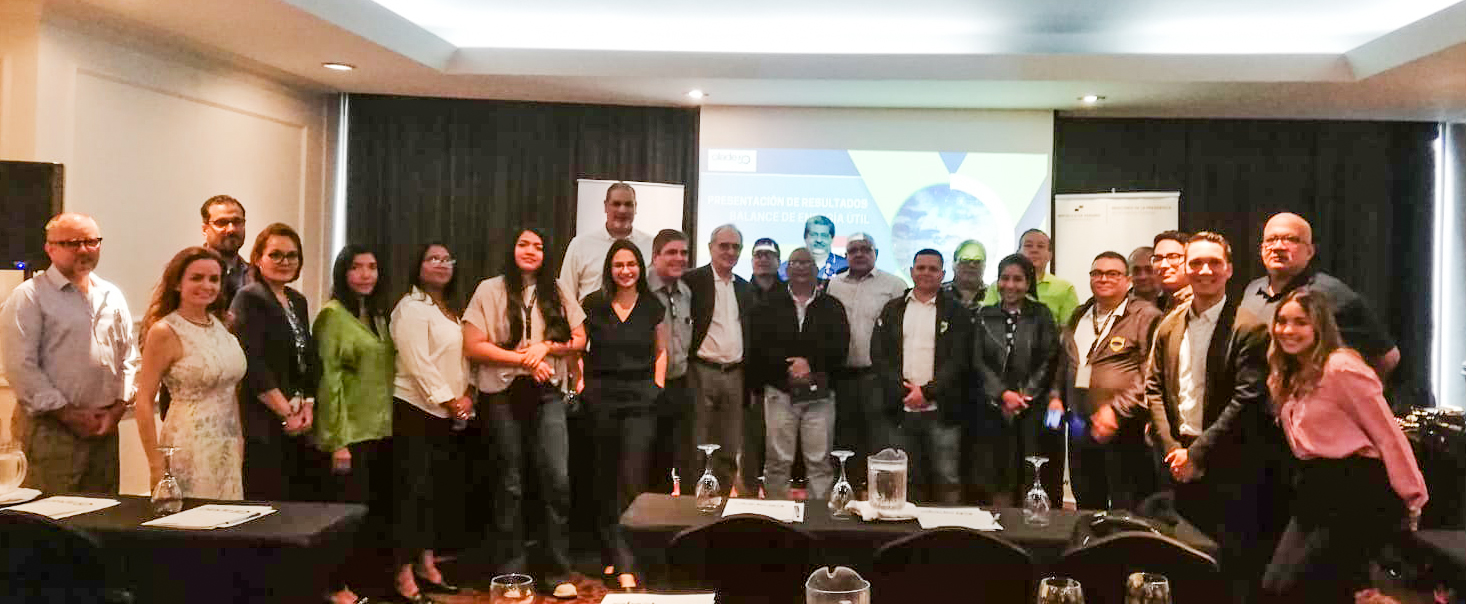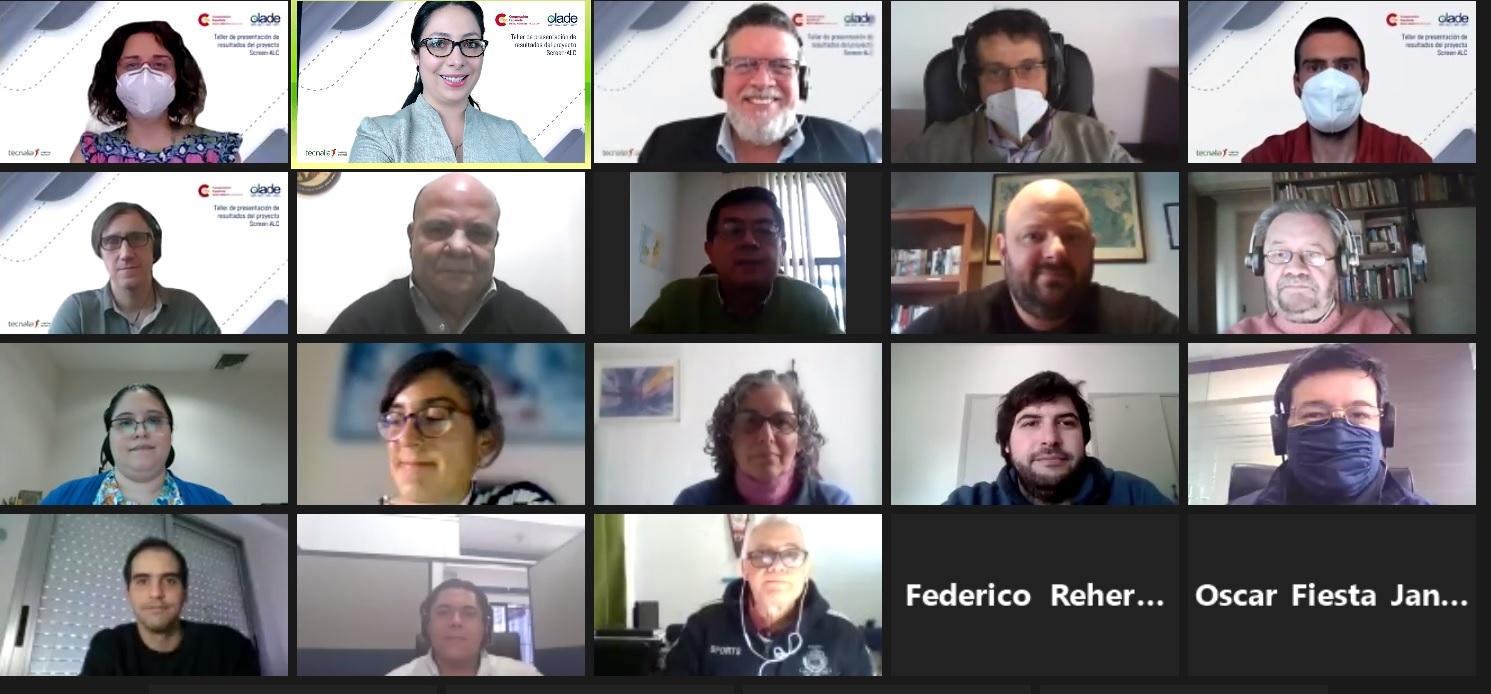
A study analyzed the effects of climate change on the energy sector in Latin America and the Caribbean and its consequences

The project “Incidence of climate change on energy planning: screening for the global assessment of vulnerability and climatic risks of the energy system in Latin America and the Caribbean;” implemented by The Latin American and Caribbean Energy Organization (OLACDE) with the financial support of AECID under the Arauclima program and the technical support of the TECNALIA foundation, reaches its culmination phase, after 20 months of implementation in Argentina, Bolivia, Brazil, Chile, Ecuador, El Salvador, Grenada, Honduras, Panama, Paraguay, Peru, Dominican Republic and Uruguay.

At a final workshop to present the results of the project, held on the morning of July 29, 2021, OLACDE’s executive secretary, Alfonso Blanco, pointed out that Latin America and the Caribbean has made great progress in its energy systems, but that it is also one of the regions most vulnerable to the effects of climate change. “In some way, all our energy infrastructure has a great impact derived from climate change and this must be part of the planning of our sector,” he said.

Furthermore, he explained that this project is giving a planning signal and that action is being taken to foresee the effects that climate change may have on energy systems and how to act in response to these risks. “Generating the mechanisms to be the basis and constitute our sectoral planning and thus be prepared and make our energy systems increasingly robust and resilient,” he stressed.

Meanwhile, specialists from the Tecnalia Foundation’s technical team, made up of Jorge Paz, Elena Turienzo and Joshua Lizundia, explained the objective and scope of the study, the methodology, tools, mathematical models used and the geo-referenced results obtained in the analysis of climate change threats, the vulnerability of the energy system, the evolution of the potential impact on infrastructure, the preliminary estimation of risk and the integration of possible adaptation measures in energy planning.

Medardo Cadena, OLACDE’s Director of Studies, Projects and Information, mentioned that the objective and purpose of this project is to generate tools and inputs to support countries in their planning tasks, which is currently essential.

Project information

The study analyzed the effects of climate change on the energy sector in Latin America and the Caribbean and its consequences. The damage caused by extreme weather events to energy infrastructure in the region is increasing, with a direct impact on the population, not only in terms of energy supply, but also in the provision of basic services such as water and health, which in turn depend on energy supply.

At the same time, rainfall patterns, winds, etc. are being altered, affecting generation, nearly 50% of which is of hydroelectric origin.

Many countries are currently undergoing a transformation of their energy sector, with an increasing penetration of renewable energies, which in turn increases their level of exposure and vulnerability to climate change, conditioning their development.
 

Share this news

A study analyzed the effects of climate change on the energy sector in Latin America and the Caribbean and its consequences

Newsletter summary

The project “Incidence of climate change on energy planning: screening for the global assessment of vulnerability and climatic risks of the energy system in Latin America and the Caribbean;” implemented by The Latin American and Caribbean Energy Organization (OLACDE) with the financial support of AECID under the Arauclima program and the technical support of the TECNALIA foundation, reaches its culmination phase, after 20 months of implementation in Argentina, Bolivia, Brazil, Chile, Ecuador, El Salvador, Grenada, Honduras, Panama, Paraguay, Peru, Dominican Republic and Uruguay.

Knowledge and Training

We promote advanced technical training programs that facilitate the exchange of experiences, as well as the development of the human and institutional capacities needed to support the energy transformations in our region.

Our academic offering includes executive programs, postgraduate diplomas, master’s degrees, and innovative initiatives focused on topics such as energy transition, conventional energy, renewable energy, e-mobility, and regional integration.

OLACDE creates a regional network focused on energy knowledge that connects governments, young professionals, academics, and sector experts to drive collaborative solutions through technical cooperation and talent development to address future energy and climate challenges.

Technical cooperation and financing

We strengthen South-South and triangular cooperation ties as drivers to accelerate energy transitions in Latin America and the Caribbean. OLACDE brings together efforts among governments, multilateral organizations, academic institutions, and the private sector to mobilize financing, technical capacities, and innovative solutions tailored to our regional reality.

We promote strategic initiatives aimed at directing resources toward projects focused on decarbonization, conventional energy, renewable energy, and energy justice, with the objective of establishing a more efficient, inclusive, and sustainable regional cooperation architecture.

Regional Energy Community

We are building a regional energy community with a global outlook that seeks to position Latin America and the Caribbean as a key player on the international stage. OLACDE strengthens its representation in major multilateral forums related to energy, trade, and climate by fostering strategic alliances and promoting international cooperation.

Through events such as Energy Week, together with new spaces for international dialogue, we promote a collective voice that helps attract financial investment and create new opportunities for sustainable development across our region.

Energy Transition and Strategic Projects

We drive an energy transition based on principles of sustainability, energy security, and social inclusion. OLACDE supports countries in adopting new technologies related to energy efficiency, energy storage, green hydrogen, electromobility, and grid digitalization to accelerate the sector’s decarbonization process.

Our approach also includes promoting strategic projects that strengthen energy resilience at the regional level, contributing to emission reductions while consolidating a cleaner and more competitive energy infrastructure. Initiatives such as OEMLAC position our region as a leading reference in climate innovation and sustainable energy transition.

Energy information and data

We develop regional platforms dedicated to energy information, technical analysis, and strategic data systems that strengthen both public and private decision-making in the sector. OLACDE promotes the digital transformation of the sector through the use of artificial intelligence, georeferencing, and advanced tools for regional energy analysis.

The integration of systems such as SieLAC, together with new regional platforms, allows for the consolidation of reliable and up-to-date technical information, facilitating modern, interoperable, and evidence-based energy planning.

Regional Energy Integration

We promote cooperation in the regional energy sector, focused on collaboration, infrastructure development, and regulatory harmonization, with the objective of strengthening energy security in Latin America and the Caribbean. OLACDE coordinates projects related to electrical interconnection, gas integration, and regional energy planning, seeking to create efficient and sustainable partnerships.

Through cooperation with the governments of our 27 member countries, regional blocs, multilateral institutions, and both public and private stakeholders, we drive strategic initiatives that promote regulatory harmonization and new energy exchange mechanisms, in order to enhance national capacities and accelerate an integrated energy transition at the regional level.

This site is registered on wpml.org as a development site. Switch to a production site key to remove this banner.