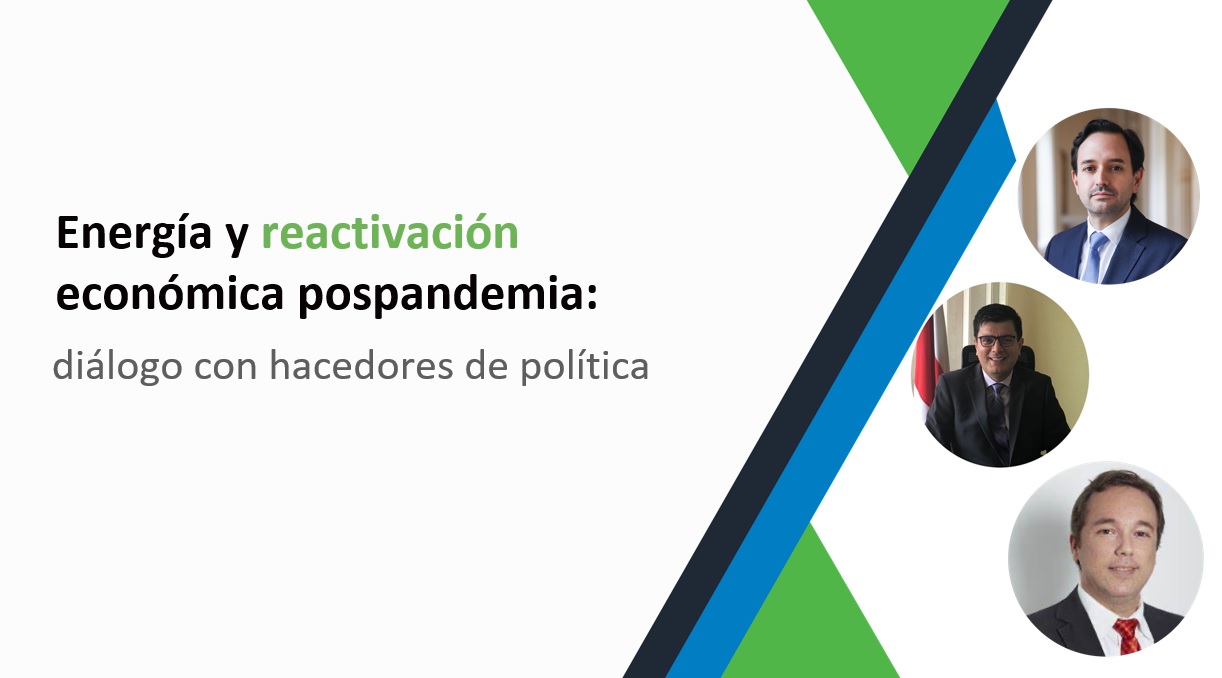
 “Through previous dialogues with companies and regulators, we have identified some important elements to consider in the post-pandemic stage. We highlight the role of digitization as a fundamental element to improve company efficiency and cost control, and how, based on these necessary improvements, it contributes to maintaining reasonable rates to users in a context of deep economic crisis that all the region is facing.”
“We cannot ignore the role that technological incorporation will have in mobility, the electrification of many domestic uses and the new scheme for the link between companies and consumers creating the figure of prosumers.”
“We also discussed the need to have more demanding levels of quality of service and how digitization and modernization of networks contribute to improving quality indicators, which goes hand in hand with new investment needs and the role that will have the development banking as a channel to provide the necessary resources for this transformation”.

““We have introduced policies that are tied to investment decisions. During the pandemic we have given an over-deduction to investments in non-conventional renewable energy generation and investments in energy efficiency, an over-deduction of 50% of the investment value. We extended this policy for a period of 15 years to attract investment and new
agents”.
“We have focused a lot on the issue of sustainable mobility. We introduced an electric mobility law, where the tariffs for electric vehicles were eliminated, VAT was reduced, it was set to 5% for electric vehicles, electric vehicles were excluded from restrictions such as the ‘pico y placa’.”
“We have a tax regulatory framework, which is totally conducive to the acceleration and mass generation with alternative energies such as wind and solar.”

“In Panama we have an energy transition agenda framed in the 4 trends: decarbonization, digitization, decentralization and democratization, seeking the figure of prosumers.”
“In this pandemic, we see the need to strengthen the technical training of our staff and the application of energy efficiency measures that allow us to generate savings.”
“During this period, the State of Panama decided to give an additional subsidy during this year, assuming half the cost of the electricity bill of all customers who consume up to 300 kWh per month and 30% of consumers who will reach up to 1,000 kWh per month.”
“We are evaluating the possibility, in the case of the construction of low-income housing, through the banking sector, to give an incentive for the incorporation of solar panels and energy efficiency standards to reduce the cost that these people will have in their electricity consumption in the future and this has a fiscal impact.”
 “
“
“We believe that it is important in this recovery period, that the energy transition must be at the center of economic recovery and that this energy system must be clean, affordable, safe and more resilient.”
“We have a new regulation with greater precision so that many people can have access to democratization in the generation and incorporate installed capacity that contributes to diversification towards climate change.”
“We are going to send to Congress a bill on the direct uses of geothermal energy in the industrial, tourist, agricultural and aero industrial sectors so that fossil fuels can be substituted in these sectors.”
“We have an important legal framework. A series of regulations for charging stations and spare parts exemption. Costa Rica has more than 70 charging stations throughout the country and before the end of the year we hope to have 28 new stations.”