OLACDE organized meeting to discuss global energy security

The Latin American and Caribbean Energy Organization, OLACDE, brought together businessmen, government officials and academics in Quito to analyze world energy trends.

The keynote address was delivered by Paul Simmons of Yale University, who presented the realities of energy security and the global status of energy transition initiatives.

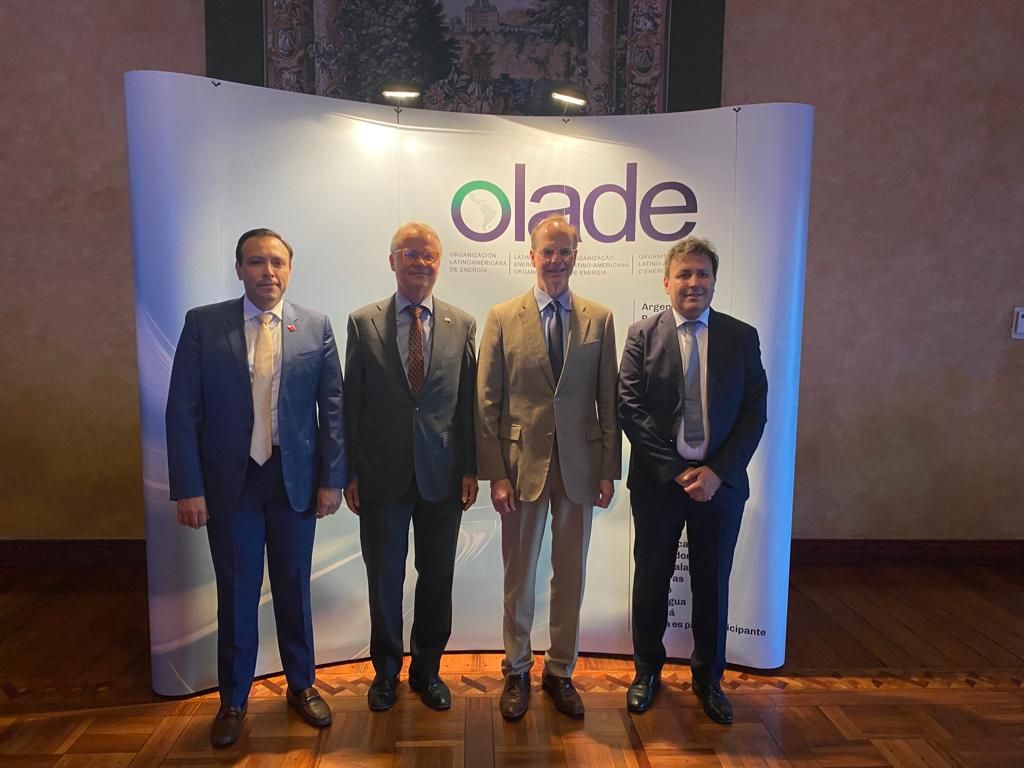
On the afternoon of May 3, 2022, in the city of Quito, at the Rancho San Francisco, members of the business community met to analyze, through the voices of three experts, the reality of global energy security.

The event was inaugurated by Alfonso Blanco, Executive Secretary of OLACDE. In his speech, he spoke about the impact of the current political situation in Europe on the world economy and highlighted the reality of the American continent and its efforts to advance in an energy transition:

“Despite many adversities, Latin America and the Caribbean has made progress. It is the region with the highest participation of renewable sources in the energy matrix; 30% of the primary energy supply matrix is of renewable origin in our region, while in the rest of the world it is 13%. This is an aspect that we must take into consideration,” explained OLACDE’s executive secretary.   Furthermore, he added that “Latin America and the Caribbean is taking steps to improve the living conditions of its population in terms of energy access, since today more than 97% of its inhabitants have access to energy and 18 million are not connected to the grid, when 20 years ago more than 66 million did not have electricity.”

For his part, Philipp Schauer, German Ambassador to Ecuador, highlighted the strategies that his country has implemented to encourage the use of clean energy, such as green hydrogen, and that could serve as a reference for initiatives in other regions. “The energy transition aims to make it possible to abandon nuclear energy. It should make Germany less dependent on oil and gas imports, we know that a sustainable energy policy can also be successful from an economic point of view, and we also want to be an example to follow,” the German ambassador emphasized.

He also highlighted the current situation: “The outlook is mixed. The share of renewable energies in electricity production has increased, reaching 44%…Thanks to progress in the electricity sector, CO2 emissions have fallen by more than 32% compared to 1990 and energy efficiency has increased by 3% per year. But there are challenges that persist,” he concluded.

The keynote address was given by Paul Simmons, Director of the Jackson Institute for Global Affairs at Yale University in the United States, who presented the state of energy security and energy transitions. In his speech he referred to the energy “trilemma”: 1) Energy security/reliability; 2) Economic growth; 3) Environmental sustainability, including climate change concerns. Against this background, he analyzed the current situation of oil, gas and renewable energies. He explained that: “The last century has witnessed multiple transitions to and from different fuels and technologies. The current challenge is one of scale: global energy use is ten times greater than in 1919… and it keeps increasing.”

He reflected on the fact that, while fossil fuels remain the primary source of energy globally, wind and solar are growing rapidly in the electricity sector. This is very important, but limited, Simmons clarified, “since electricity represents only 20% of global energy demand, so progress must be made in decarbonizing all sectors, not just electricity generation.”

Simmons pointed out that the role of companies is also key, “there are several points of climate pressure on them, which mark the relationship with their stakeholders,” he explained.

The meeting sparked great interest due to the trajectory of the speakers and was a space for reflection and exchange of concerns regarding the opportunities and challenges that the energy transition presents for the world and particularly for Ecuador.
 

Comparte esta noticia

OLACDE organized meeting to discuss global energy security

Resumen del boletín

The Latin American and Caribbean Energy Organization, OLACDE, brought together businessmen, government officials and academics in Quito to analyze world energy trends.

Conocimiento y capacitación

Fomentamos programas formativos técnicos avanzados que facilitan el intercambio de experiencias, así como el desarrollo de capacidades humanas e institucionales necesarias para respaldar las transformaciones energéticas en nuestra región.

Nuestra oferta académica incluye programas ejecutivos, diplomados, maestrías e iniciativas innovadoras centradas en temas como transición energética, energías convencionales, energías renovables, electromovilidad e integración regional.

OLACDE crea una red regional enfocada en el conocimiento energético que conecta a gobiernos, jóvenes profesionales, académicos y expertos del sector para impulsar soluciones colaborativas mediante la cooperación técnica y la formación de talento para enfrentar los desafíos energéticos y climáticos futuros.

Cooperación técnica y financiamiento

Fortalecemos los vínculos de cooperación Sur-Sur y triangular como impulsores para acelerar las transiciones energéticas en América Latina y el Caribe. OLACDE integra esfuerzos entre gobiernos, organismos multilaterales, instituciones académicas y el sector privado para movilizar financiamiento, capacidades técnicas y soluciones innovadoras adaptadas a nuestra realidad regional.

Promovemos iniciativas estratégicas dirigidas a orientar recursos hacia proyectos enfocados en descarbonización, energías convencionales, energías renovables y justicia energética, con el objetivo de establecer una arquitectura de cooperación más eficiente, inclusiva y sostenible a nivel regional.

Comunidad energética regional

Establecemos una comunidad energética regional con proyección global que busca situar a América Latina y el Caribe como un actor relevante dentro del contexto internacional. OLACDE refuerza su representación ante los principales foros multilaterales relacionados con energía, comercio y clima al fomentar alianzas estratégicas e impulsar la colaboración internacional. 

A través de eventos como la Semana de la Energía, junto con nuevos espacios para el diálogo internacional, promovemos una voz colectiva que permita atraer inversiones financieras, así como nuevas oportunidades para un desarrollo sostenible dentro de nuestra región.

Transición energética y proyectos estratégicos

Impulsamos una transición energética sustentada por principios de sostenibilidad, seguridad energética e inclusión social. OLACDE apoya a los países en la adopción de nuevas tecnologías relacionadas con eficiencia energética, almacenamiento de energía, hidrógeno verde, electromovilidad y digitalización de redes para acelerar el proceso de descarbonización del sector.

Nuestro enfoque también incluye promover proyectos estratégicos que fortalezcan la resiliencia energética a nivel regional, lo que contribuye a reducir emisiones mientras se consolida una infraestructura energética más limpia y competitiva. Iniciativas tales como OEMLAC posicionan a nuestra región como un referente destacado en innovación climática y transición energética sostenible.

Información y datos energéticos

Desarrollamos plataformas regionales dedicadas a la información sobre energía, análisis técnico y sistemas de datos estratégicos que refuerzan la toma de decisiones tanto públicas como privadas en el sector. OLACDE promueve la transformación digital del sector mediante el uso de inteligencia artificial, georreferenciación y herramientas avanzadas para el análisis energético regional.


La integración de sistemas como SieLAC, junto con nuevas plataformas regionales, permite consolidar información técnica confiable y actualizada, facilitando una planificación energética moderna, interoperable y basada en evidencia.

Integración energética regional

Fomentamos la cooperación en el ámbito energético regional, centrada en la colaboración, el desarrollo de infraestructuras y la armonización regulatoria, con el objetivo de reforzar la seguridad energética en América Latina y el Caribe. OLACDE coordina proyectos relacionados con la interconexión eléctrica, la integración del gas y la planificación energética regional, buscando crear alianzas eficientes y sostenibles. 


Mediante la cooperación con los gobiernos de nuestros 27 países miembros, bloques regionales, instituciones multilaterales y actores tanto públicos como privados, impulsamos iniciativas estratégicas que promueven la armonización normativa y nuevos mecanismos de intercambio energético, con el fin de potenciar las capacidades nacionales y acelerar una transición energética integrada a nivel regional.

This site is registered on wpml.org as a development site. Switch to a production site key to remove this banner.