OLACDE’s participation in COP27 highlighted Latin America and the Caribbean’s commitment to renewability and strengths

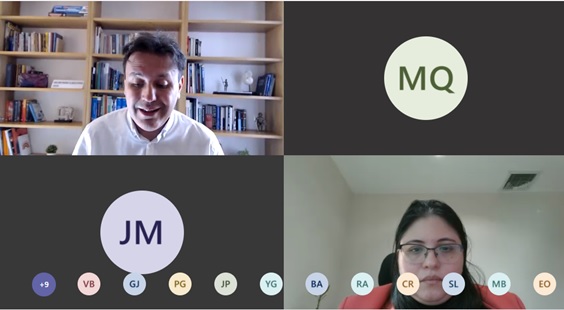
OLACDE was present at several events during the United Nations Climate Change Conference COP27 held in Egypt. Through the presentations of the Executive Secretary, Alfonso Blanco, the advantages of the energy sector in Latin America and the Caribbean were highlighted thanks to its historical commitment to renewability.

There was also a shared regional commitment to make progress in meeting greenhouse gas emission reduction targets. Latin America and the Caribbean is highly vulnerable to the impacts of climate change, despite being the greenest region on the planet, with the highest share of renewable energies, and contributing only 5% to the stock of greenhouse gases in the atmosphere. For this reason, the need for a compensation and transfer mechanism was raised, in which regional efforts in terms of climate are recognized.

Some of the topics discussed were the situation of Latin America and the Caribbean, renewability, green hydrogen, innovation, renewable energy goals, and the water and energy nexus.

The meetings also served to strengthen collaboration ties with leading international agencies.

“In renewable energies, the region is cost effective in its matrix. We are incorporating renewables under market conditions and long-term purchase agreements. That is the “game changer” situation in our regional strategy. Why? Because we have very stable electricity prices compared to the rest of the world due to the fact that we have long-term purchase agreements as a very important component in the electricity market. In that sense, in the midst of the supply crisis in the rest of the world, Latin American markets have not seen the increases that we see in other regions,” said OLACDE’s executive secretary during his talk at the “Game Changers Accelerating the Global Energy Transition” series during the Energy Action Event of the International Renewable Energy Agency (IRENA).

Renewability, hydrogen and regional challenges

The executive secretary spoke at the opening ceremony of the Green Hydrogen Day at the Global Innovation Hub Pavilion at COP27, which was moderated by Carlos Ruiz-Garvia, project manager for the UNFCCC UN Climate Innovation Center.

“It’s not about turning hydrogen production into a new extractive industry. The strategy in Latin America is to produce hydrogen to create a value chain and a new industry,” he said. OLACDE’s executive secretary reviewed the different strategies of Latin American countries and ongoing projects.

He also said that to develop renewable energy, the general public must be shown that renewable energies are cost-effective for the electricity system.

He considered that in terms of renewability, the great challenge for Latin America and the Caribbean is to reduce the gap between countries: “We have countries with 100% renewability and others with a very low percentage, mostly concentrated in the Caribbean region. They are very vulnerable to different fossil fuel supply conditions.”

He also addressed the issue of green hydrogen development at the Development Bank of Latin America (CAF) conference “Energy transition for a greener economy in LAC.”

“The region has very good conditions for hydrogen production considering costs and wind and solar resources. The key question is what the markets will be. We have a regional demand but in order to have the scale for the investment needed to be cost-competitive, we need more definition of what the markets will be,” he said.

During this conference there was also an enriching exchange on the situation of renewable energies and energy transitions in Latin America.

OLACDE’s Executive Secretary also participated in a panel on the nexus between hydropower and new renewable energies, and the opportunities for the global south, organized by GWEC. It dealt with topics such as the complementarity between hydropower and new renewables, and the promotion of energy transitions.

Progress of the RELAC initiative

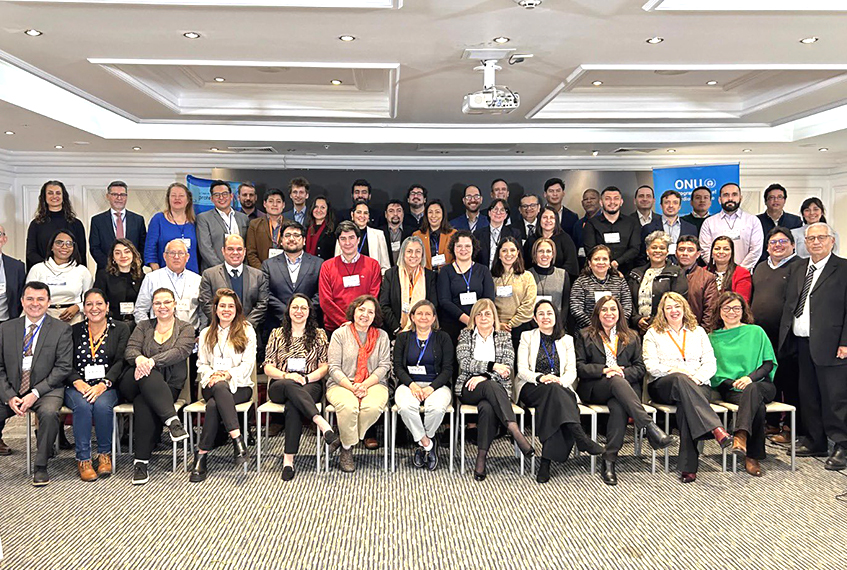
During COP27, a meeting was held with authorities from the region’s energy ministries and partner agencies of the RELAC initiative. The progress made by this climate action platform – made up of 16 Latin American countries – was presented and proposals were made on how to achieve energy security through energy transitions.

The value of coordinated support for the energy transition agenda was highlighted and Barbados was welcomed as a new member of RELAC and the third from the Caribbean region to join.
Share this news

OLACDE’s participation in COP27 highlighted Latin America and the Caribbean’s commitment to renewability and strengths

Newsletter summary

OLACDE was present at several events during the United Nations Climate Change Conference COP27 held in Egypt. Through the presentations of the Executive Secretary, Alfonso Blanco, the advantages of the energy sector in Latin America and the Caribbean were highlighted thanks to its historical commitment to renewability.

Knowledge and Training

We promote advanced technical training programs that facilitate the exchange of experiences, as well as the development of the human and institutional capacities needed to support the energy transformations in our region.

Our academic offering includes executive programs, postgraduate diplomas, master’s degrees, and innovative initiatives focused on topics such as energy transition, conventional energy, renewable energy, e-mobility, and regional integration.

OLACDE creates a regional network focused on energy knowledge that connects governments, young professionals, academics, and sector experts to drive collaborative solutions through technical cooperation and talent development to address future energy and climate challenges.

Technical cooperation and financing

We strengthen South-South and triangular cooperation ties as drivers to accelerate energy transitions in Latin America and the Caribbean. OLACDE brings together efforts among governments, multilateral organizations, academic institutions, and the private sector to mobilize financing, technical capacities, and innovative solutions tailored to our regional reality.

We promote strategic initiatives aimed at directing resources toward projects focused on decarbonization, conventional energy, renewable energy, and energy justice, with the objective of establishing a more efficient, inclusive, and sustainable regional cooperation architecture.

Regional Energy Community

We are building a regional energy community with a global outlook that seeks to position Latin America and the Caribbean as a key player on the international stage. OLACDE strengthens its representation in major multilateral forums related to energy, trade, and climate by fostering strategic alliances and promoting international cooperation.

Through events such as Energy Week, together with new spaces for international dialogue, we promote a collective voice that helps attract financial investment and create new opportunities for sustainable development across our region.

Energy Transition and Strategic Projects

We drive an energy transition based on principles of sustainability, energy security, and social inclusion. OLACDE supports countries in adopting new technologies related to energy efficiency, energy storage, green hydrogen, electromobility, and grid digitalization to accelerate the sector’s decarbonization process.

Our approach also includes promoting strategic projects that strengthen energy resilience at the regional level, contributing to emission reductions while consolidating a cleaner and more competitive energy infrastructure. Initiatives such as OEMLAC position our region as a leading reference in climate innovation and sustainable energy transition.

Energy information and data

We develop regional platforms dedicated to energy information, technical analysis, and strategic data systems that strengthen both public and private decision-making in the sector. OLACDE promotes the digital transformation of the sector through the use of artificial intelligence, georeferencing, and advanced tools for regional energy analysis.

The integration of systems such as SieLAC, together with new regional platforms, allows for the consolidation of reliable and up-to-date technical information, facilitating modern, interoperable, and evidence-based energy planning.

Regional Energy Integration

We promote cooperation in the regional energy sector, focused on collaboration, infrastructure development, and regulatory harmonization, with the objective of strengthening energy security in Latin America and the Caribbean. OLACDE coordinates projects related to electrical interconnection, gas integration, and regional energy planning, seeking to create efficient and sustainable partnerships.

Through cooperation with the governments of our 27 member countries, regional blocs, multilateral institutions, and both public and private stakeholders, we drive strategic initiatives that promote regulatory harmonization and new energy exchange mechanisms, in order to enhance national capacities and accelerate an integrated energy transition at the regional level.

This site is registered on wpml.org as a development site. Switch to a production site key to remove this banner.