In 2024, Latin America and the Caribbean will increase their non-conventional renewable energy generation, especially solar and wind, by 30%.

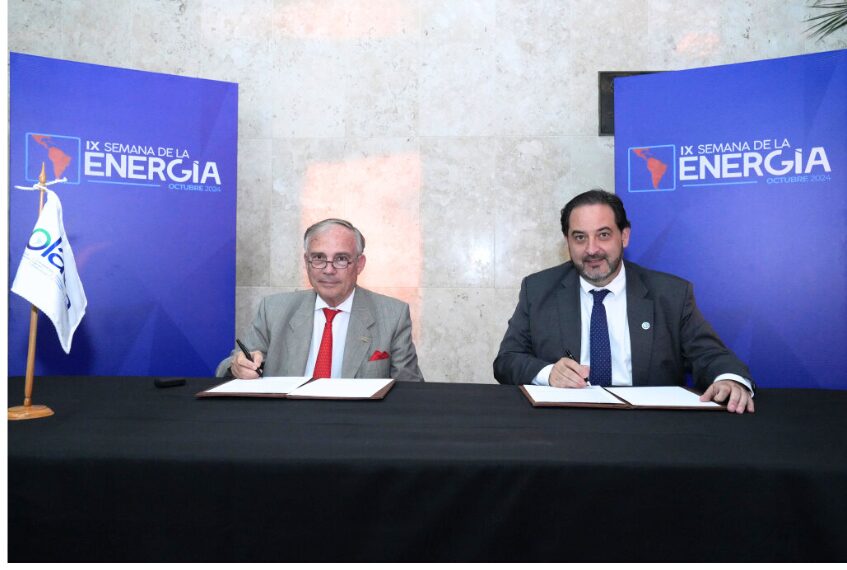
The city of Asunción became the energy capital of Latin America and the Caribbean with the commencement of the IX Energy Week, the most important sector event in the region, held at the Central Bank of Paraguay (BCP) Cultural Center.

The President of the Republic of Paraguay, Santiago Peña, participated in the inaugural ceremony along with the Executive Secretary of The Latin American and Caribbean Energy Organization (OLACDE), Andrés Rebolledo, the Minister of Public Works and Communications, Eng. Claudia Centurión, representatives from the Inter-American Development Bank (IDB) Chaverri Suárez, the World Bank, Harold Bedoya, the Development Bank of Latin America and the Caribbean (CAF), Jorge Srur, among other national and international authorities.

The President of the Republic of Paraguay, Santiago Peña, highlighted energy as the path toward comprehensive and equitable development during the opening of the “IX Energy Week.” At the event, which brings together the main energy authorities and experts from Latin America and the Caribbean, Peña called for regional integration and collaboration to face current energy and climate challenges.

During the opening of the IX Energy Week, the Executive Secretary of The Latin American and Caribbean Energy Organization (OLACDE) presented the “2024 Energy Outlook for Latin America and the Caribbean,” which reveals a scenario of moderate growth in energy supply, increasing demand, and significant progress in the transition to renewable sources.

The report highlights that the total energy supply in the region has increased by 2.2%, while final energy consumption has grown by 3.8%, driven by an average GDP growth of 3% in Latin America and the Caribbean. Specifically, the document notes that renewable generation will reach nearly 69% participation this year, an increase of almost 5 percentage points from the previous year, consolidating the trend toward a greener energy matrix.

Non-conventional renewable energies (NCRE), such as solar and wind, have shown remarkable growth in capacity and generation, with a notable increase of 30% in 2024. This progress has been essential to support electrification efforts, which will see a 3.2% increase in supply in the region.

On the other hand, although oil production has grown for the fourth consecutive year, driven by increased exports, the consumption of oil derivatives has shown a slight decline, indicating structural changes in energy consumption patterns in the region. Natural gas has also registered a slight increase, largely driven by its use in electricity generation.

Coal production, traditionally an important source for some countries, has suffered a significant 20% decline, aligning with global efforts to reduce carbon emissions. In contrast, the report notes that energy efficiency (EE) has yet to show a solid recovery after the pandemic, representing an opportunity for public policies and future investments.

A crucial aspect that still requires attention is energy access. According to the report, 17 million people in the region still lack access to basic energy services, indicating that progress in this field has not been sufficient to fully close the access gap.

The IX Energy Week brings together ministers, experts, and leaders from the energy sector across the region to discuss the necessary strategies to address these challenges and continue moving toward more sustainable and equitable energy integration.
 

Comparte esta noticia

In 2024, Latin America and the Caribbean will increase their non-conventional renewable energy generation, especially solar and wind, by 30%.

Resumen del boletín

The city of Asunción became the energy capital of Latin America and the Caribbean with the commencement of the IX Energy Week, the most important sector event in the region, held at the Central Bank of Paraguay (BCP) Cultural Center.

Conocimiento y capacitación

Fomentamos programas formativos técnicos avanzados que facilitan el intercambio de experiencias, así como el desarrollo de capacidades humanas e institucionales necesarias para respaldar las transformaciones energéticas en nuestra región.

Nuestra oferta académica incluye programas ejecutivos, diplomados, maestrías e iniciativas innovadoras centradas en temas como transición energética, energías convencionales, energías renovables, electromovilidad e integración regional.

OLACDE crea una red regional enfocada en el conocimiento energético que conecta a gobiernos, jóvenes profesionales, académicos y expertos del sector para impulsar soluciones colaborativas mediante la cooperación técnica y la formación de talento para enfrentar los desafíos energéticos y climáticos futuros.

Cooperación técnica y financiamiento

Fortalecemos los vínculos de cooperación Sur-Sur y triangular como impulsores para acelerar las transiciones energéticas en América Latina y el Caribe. OLACDE integra esfuerzos entre gobiernos, organismos multilaterales, instituciones académicas y el sector privado para movilizar financiamiento, capacidades técnicas y soluciones innovadoras adaptadas a nuestra realidad regional.

Promovemos iniciativas estratégicas dirigidas a orientar recursos hacia proyectos enfocados en descarbonización, energías convencionales, energías renovables y justicia energética, con el objetivo de establecer una arquitectura de cooperación más eficiente, inclusiva y sostenible a nivel regional.

Comunidad energética regional

Establecemos una comunidad energética regional con proyección global que busca situar a América Latina y el Caribe como un actor relevante dentro del contexto internacional. OLACDE refuerza su representación ante los principales foros multilaterales relacionados con energía, comercio y clima al fomentar alianzas estratégicas e impulsar la colaboración internacional. 

A través de eventos como la Semana de la Energía, junto con nuevos espacios para el diálogo internacional, promovemos una voz colectiva que permita atraer inversiones financieras, así como nuevas oportunidades para un desarrollo sostenible dentro de nuestra región.

Transición energética y proyectos estratégicos

Impulsamos una transición energética sustentada por principios de sostenibilidad, seguridad energética e inclusión social. OLACDE apoya a los países en la adopción de nuevas tecnologías relacionadas con eficiencia energética, almacenamiento de energía, hidrógeno verde, electromovilidad y digitalización de redes para acelerar el proceso de descarbonización del sector.

Nuestro enfoque también incluye promover proyectos estratégicos que fortalezcan la resiliencia energética a nivel regional, lo que contribuye a reducir emisiones mientras se consolida una infraestructura energética más limpia y competitiva. Iniciativas tales como OEMLAC posicionan a nuestra región como un referente destacado en innovación climática y transición energética sostenible.

Información y datos energéticos

Desarrollamos plataformas regionales dedicadas a la información sobre energía, análisis técnico y sistemas de datos estratégicos que refuerzan la toma de decisiones tanto públicas como privadas en el sector. OLACDE promueve la transformación digital del sector mediante el uso de inteligencia artificial, georreferenciación y herramientas avanzadas para el análisis energético regional.


La integración de sistemas como SieLAC, junto con nuevas plataformas regionales, permite consolidar información técnica confiable y actualizada, facilitando una planificación energética moderna, interoperable y basada en evidencia.

Integración energética regional

Fomentamos la cooperación en el ámbito energético regional, centrada en la colaboración, el desarrollo de infraestructuras y la armonización regulatoria, con el objetivo de reforzar la seguridad energética en América Latina y el Caribe. OLACDE coordina proyectos relacionados con la interconexión eléctrica, la integración del gas y la planificación energética regional, buscando crear alianzas eficientes y sostenibles. 


Mediante la cooperación con los gobiernos de nuestros 27 países miembros, bloques regionales, instituciones multilaterales y actores tanto públicos como privados, impulsamos iniciativas estratégicas que promueven la armonización normativa y nuevos mecanismos de intercambio energético, con el fin de potenciar las capacidades nacionales y acelerar una transición energética integrada a nivel regional.

This site is registered on wpml.org as a development site. Switch to a production site key to remove this banner.